
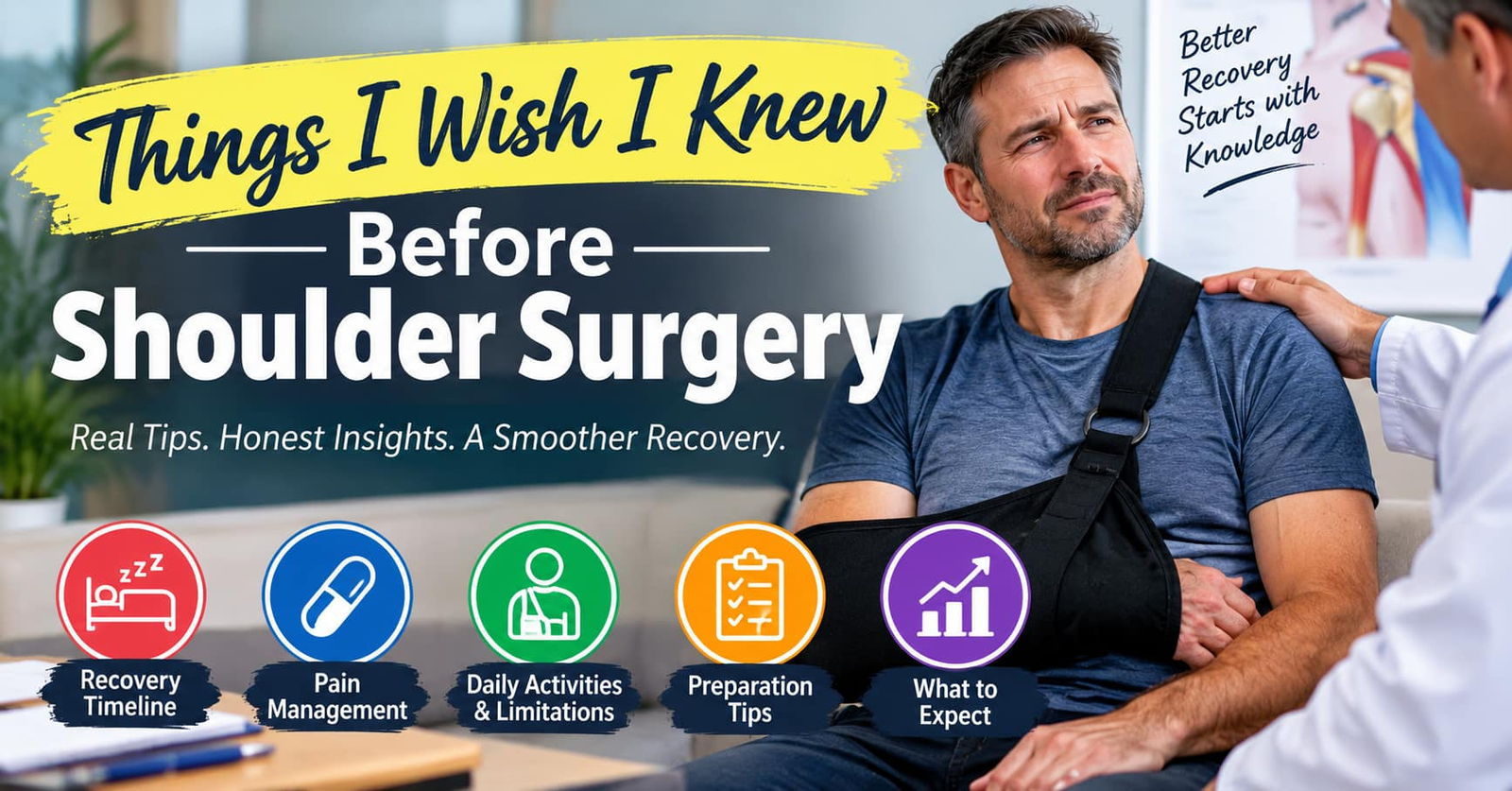
Things I Wish I Knew Before Shoulder Surgery: 15 Things to Expect
The single biggest thing I wish I knew before shoulder surgery is that recovery isn’t a straight line it’s a slow, sometimes frustrating climb that rewards patience over speed. Between the rotator cuff repair, the sling, the swelling, and the emotional dips, nobody quite prepares you for how much daily life shifts in those first few weeks after a major shoulder procedure. Even simple things like bathing, dressing, or reaching a shelf suddenly need a new plan, and that catches most patients off guard.
If you’re staring down a shoulder replacement or arthroscopy date in India and feeling anxious, you’re not alone in that worry. This guide walks through the real, lived lessons from recovery-space prep to pain management, sling use, and physical therapy so you can walk into surgery informed, calm, and genuinely ready for what’s actually ahead, instead of guessing your way through recovery.
Prepare Your Recovery Space Before Shoulder Surgery
Once you’re home, your couch or bed becomes command central for weeks, so setting up a proper recovery space before shoulder surgery matters more than most people expect. Move dishes, chargers, and snacks within reach of your uninjured arm, and keep your sling, ice packs, and pillows nearby before you even leave for the hospital.
Small logistics a recliner, a water bottle, entertainment within arm’s reach reduce unnecessary strain on your healing rotator cuff. Every physiotherapy clinic will tell you the same thing: an accessible home is the first real step of post-surgical rehab, long before your first physical therapy session even begins.
10 things I wish I knew about setting up my recovery space:
- Move everyday items to waist- or chest-height shelves before surgery, not after.
- A recliner or wedge pillow helps more than a flat bed in the first week.
- Keep your phone charger, water bottle, and remote within one-arm reach at all times.
- Loose, front-opening clothes save you from painful overhead arm movements.
- Pre-cook or order meals for the first few days cooking one-handed is harder than it sounds.
- Slip-on footwear avoids the need to bend or use both hands.
- A shower stool and handheld showerhead make bathing far safer and easier.
- Keep pain medication, ice packs, and your sling in one visible, easy-to-reach spot.
- Set up your workspace or laptop stand so you don’t strain your neck compensating for the arm.
- Ask someone to check your recovery space with you before the surgery date, not after.
Get Ready to Be Consistent and Persevere Through Shoulder Surgery Recovery
Healing after shoulder surgery is a marathon, not a sprint, and consistency in physical therapy matters more than any single “good” day. Progress can feel invisible for weeks, especially with range-of-motion exercises, but skipped sessions quietly slow the entire recovery timeline down.
Keep a personal goal in sight lifting your child, returning to badminton, reaching a kitchen shelf to stay motivated through tough PT visits. Patients who stick with their rehabilitation program consistently report smoother outcomes than those who train in bursts and gaps.
10 things I wish I knew about staying consistent during recovery:
- Some days will feel like no progress at all that’s normal, not a setback.
- Skipping even a few PT sessions can noticeably slow your overall timeline.
- Small, daily exercises matter more than occasional intense ones.
- Progress in shoulder recovery is rarely visible week to week track it monthly instead.
- Frustration is part of the process, not a sign something’s wrong.
- Setting one clear personal goal keeps motivation steady on hard days.
- A recovery journal or app helps you actually see the slow improvement.
- Comparing your timeline to someone else’s recovery only adds unnecessary stress.
- Celebrating small wins like buttoning a shirt independently keeps morale up.
- Consistency beats intensity; overdoing it on a “good day” can set you back.
Learn How to Manage Pain Sustainably After Shoulder Surgery
Pain is an unavoidable part of any surgical procedure, but leaning only on medication is not a sustainable pain-management plan. Ice packs, gentle stretching under a physiotherapist’s guidance, and gradually tapering medicine usually work better long-term than staying dependent on painkillers alone.
Always follow your orthopedic surgeon’s specific instructions first, since every rotator cuff or shoulder replacement case heals differently. Listening to your body resting when needed, moving when encouraged helps prevent complications like frozen shoulder later in recovery.
10 things I wish I knew about managing pain sustainably:
- Pain medication should taper gradually, not stop abruptly.
- Ice packs work best in short, regular intervals rather than long single sessions.
- Pain often spikes after PT sessions that’s expected, not alarming.
- Sleeping propped up reduces nighttime shoulder pain significantly.
- Deep breathing and relaxation techniques genuinely help manage discomfort.
- Tracking pain levels daily helps your surgeon adjust your plan accurately.
- Some residual ache can persist for months it doesn’t mean healing has failed.
- Over-relying on painkillers can mask warning signs your body is trying to send.
- Gentle movement, not total rest, often reduces pain faster over time.
- Never push through sharp or sudden pain that’s your body’s stop signal.
Gather Your Emotional and Logistical Support Team Before Shoulder Surgery
Shoulder surgery affects far more than one joint grocery runs, stairs, and even bathing become genuinely harder tasks. Recruiting family, friends, or neighbors for cooking, errands, and childcare before your surgery date removes enormous logistical pressure during the hardest early days.
Emotional support matters just as much as physical help, since frustration and low mood are common during slow healing stretches. Don’t hesitate to lean on your support system or even a counselor recovery is not something you need to push through alone.
10 things I wish I knew about building my support system:
- Arrange help for at least the first two weeks, not just discharge day.
- Someone should be available to assist with dressing and bathing initially.
- Grocery and errand support matters more than people expect.
- Childcare or pet-care help should be planned in advance, not scrambled together.
- Emotional lows are common around week two or three support helps most then.
- Talking openly with family about your limitations avoids frustration on both sides.
- A support group of fellow patients can normalize the tough emotional moments.
- Accepting help isn’t weakness most loved ones genuinely want to be useful.
- One-handed tasks like tying shoes or opening jars need real logistical planning.
- Having a single point-person to coordinate help reduces chaos during recovery.
Swelling and Discomfort Are Normal but Manageable After Shoulder Surgery
Many patients are caught off guard by how much swelling shows up beyond the shoulder itself. This happens because fluid accumulates and mobility drops sharply right after your surgical procedure, which is a completely normal part of the body’s healing response.
Keeping your arm elevated, applying ice as directed, and gently moving your fingers and elbow can meaningfully reduce discomfort. Your orthopedic surgeon’s aftercare instructions will guide exactly how to manage swelling safely during the first fragile week.
10 things I wish I knew about swelling and discomfort:
- Swelling often extends into the hand and fingers, not just the shoulder.
- Elevating the arm above heart level reduces swelling faster.
- Gentle finger and wrist movement keeps circulation active without straining the shoulder.
- Swelling usually peaks around day two or three, then gradually eases.
- Tightness in the sling area is common and manageable with adjustment.
- Bruising can spread further down the arm than expected it’s normal.
- Ice should never sit directly on skin; always use a cloth barrier.
- Sudden, severe swelling or numbness should be reported to your surgeon immediately.
- Compression sleeves, if recommended, can help reduce prolonged swelling.
- Discomfort easing gradually each day is a better sign than a “pain-free” day followed by a bad one.
The Healing Process Takes Time After Shoulder Surgery
Full recovery from shoulder surgery can take several months, and strength or range of motion often returns even later than the initial healing. Doctors can only estimate a recovery timeline, so setting realistic expectations early prevents unnecessary disappointment down the road.
Every case rotator cuff repair, arthroscopy, or full shoulder replacement heals at its own pace depending on age, health, and consistency with physical therapy. Patience with the process, rather than comparing your timeline to someone else’s, leads to better long-term outcomes.
10 things I wish I knew about how long healing really takes:
- Full strength can take six months to a year to fully return.
- Initial pain relief doesn’t mean the joint is fully healed internally.
- Delaying necessary surgery can worsen joint damage and extend eventual recovery time.
- Range of motion typically improves faster than raw strength does.
- Age and overall health genuinely affect how fast healing progresses.
- Recovery timelines are estimates, not guarantees flexibility helps mentally.
- Plateaus in progress are a normal part of long-term healing, not failure.
- Returning to sport or heavy lifting often takes longer than returning to daily tasks.
- Bone and tissue healing continues quietly even after pain has mostly faded.
- Following the full rehab plan, even after feeling “better,” protects long-term results.
You May Experience Other Aches and Pains After Shoulder Surgery
Recovery rarely stays contained to just the shoulder many patients notice new discomfort in the elbow, neck, or wrist during rehabilitation. This usually happens from compensation patterns or prolonged immobilization rather than any surgical complication, though it’s worth reporting.
Physical therapy that addresses your entire upper body, not just the shoulder joint, helps resolve these secondary aches faster. Mentioning any new or unusual pain to your orthopedic surgeon ensures it gets managed early instead of becoming a lingering issue.
10 things I wish I knew about aches beyond the shoulder itself:
- Elbow pain is common from compensating while the shoulder stays immobilized.
- Neck stiffness often develops from favoring one side for weeks.
- Wrist and hand fatigue can build up from one-handed daily tasks.
- Lower back discomfort can appear from altered posture during recovery.
- Reporting new pain early prevents it from becoming a bigger issue later.
- Whole-arm physical therapy, not just shoulder-focused work, resolves this faster.
- Sleeping position changes can cause unrelated soreness elsewhere in the body.
- Compensatory pain usually eases once shoulder strength and mobility improve.
- Stretching the neck and upper back gently can relieve secondary tension.
- Not all post-surgery pain is “the shoulder” other joints deserve attention too.
Using a Sling Properly Is Essential After Shoulder Surgery
Wearing your sling correctly protects the healing tissue far more than people realize, and removing it too early can genuinely set recovery back. Your surgeon will specify exact wear-time based on whether you had a rotator cuff repair or full replacement.
Loosening or skipping the sling to “test” mobility is a common but risky mistake during early shoulder surgery recovery. Trust the prescribed timeline, since the shoulder immobilizer is doing quiet, essential work even when you feel ready to move.
10 things I wish I knew about using my sling correctly:
- Wear time is usually four to six weeks, but it varies by procedure.
- Removing the sling early, even briefly, can strain healing tissue.
- The sling should support the elbow, not just hang loosely off the shoulder.
- Sleeping in the sling is often required in early recovery, even if uncomfortable.
- Adjusting the strap for comfort is fine skipping wear time is not.
- Showering usually requires careful, surgeon-approved sling removal, not casual skipping.
- A poorly fitted sling can cause unnecessary neck and back strain.
- Some swelling under the sling is normal; numbness or tingling is not.
- Your surgeon, not personal comfort level, should decide when the sling comes off.
- Keeping a spare sling on hand avoids panic if one needs washing.
Commit to Healing Through Physical Therapy After Shoulder Surgery
Physical therapy is the single most important factor separating a smooth recovery from a prolonged one after almost any shoulder surgery. It restores strength, mobility, and function while also helping prevent scar tissue from limiting your range of motion later.
No two physical therapy plans look identical, since your therapist tailors exercises to your specific goals sport, work, or simply pain-free daily movement. Open communication about pain levels lets your therapist adjust intensity, keeping your recovery both safe and steadily progressing.
10 things I wish I knew about committing to physical therapy:
- Skipping PT sessions has a bigger long-term cost than it seems at the time.
- Home exercises between sessions matter just as much as the clinic visits.
- Every physical therapy plan is personalized comparing routines to others isn’t useful.
- Being honest about pain levels helps your therapist adjust safely.
- Scar tissue can quietly limit motion if therapy is neglected early on.
- Therapy intensity should increase gradually, never all at once.
- Consistency with therapy shortens the total recovery timeline noticeably.
- Some exercises will feel uncomfortable but shouldn’t feel sharply painful.
- Physical therapists can adapt your plan around work or sport-specific goals.
- Sticking with therapy even after pain fades protects your long-term shoulder function.
Common Concerns About Shoulder Surgery
How long will I need to wear a sling after shoulder surgery? Most patients wear a sling for four to six weeks, though the exact duration depends on whether you had a rotator cuff repair or a full shoulder replacement. Your orthopedic surgeon will personalize this based on your specific procedure and healing progress.
Is it normal to experience hand swelling after shoulder surgery?
Yes, hand swelling after shoulder surgery is common because of fluid buildup and reduced arm mobility. Elevating the arm, applying ice, and gently moving your fingers usually brings relief within a few days.
Can delaying shoulder replacement surgery make my condition worse?
Yes putting off shoulder replacement surgery can allow further joint degeneration, more pain, and a longer eventual recovery. Discussing timing honestly with your orthopedic surgeon helps you avoid unnecessary complications.
Why do I have medial elbow pain after shoulder surgery?
Medial elbow pain after shoulder surgery is usually caused by compensatory movement or prolonged immobilization rather than a surgical issue. Targeted physical therapy for the whole arm typically resolves it within a few weeks.
Suggested Internal Linking Strategy
- Link “physical therapy” mentions to a dedicated post-surgical physiotherapy/rehab service page.
- Link “shoulder replacement surgery” to a procedure-specific explainer page.
- Link “rotator cuff repair” to a rotator cuff surgery and recovery timeline article.
- Link “frozen shoulder” to a standalone frozen-shoulder symptoms/treatment page.
- Link “sling for shoulder surgery” to a post-op instructions or FAQ page.
Suggested External Authority Mentions
- Indian Orthopaedic Association or a recognized Indian orthopedic hospital’s patient-education page, for post-op care guidelines.
- A peer-reviewed source (e.g., a physiotherapy or orthopedic journal) on rotator cuff rehabilitation timelines.
Suggested Topical Authority Expansion Topics
- Rotator cuff surgery recovery timeline, week by week
- Shoulder replacement surgery cost and recovery in India
- Frozen shoulder vs. rotator cuff tear: how to tell the difference
- Best exercises after shoulder arthroscopy
- What to eat after shoulder surgery for faster healing
- Choosing between physiotherapy and surgery for shoulder pain